High Art: The Ultimate Strain Guide for Unlocking Your Creative Flow State
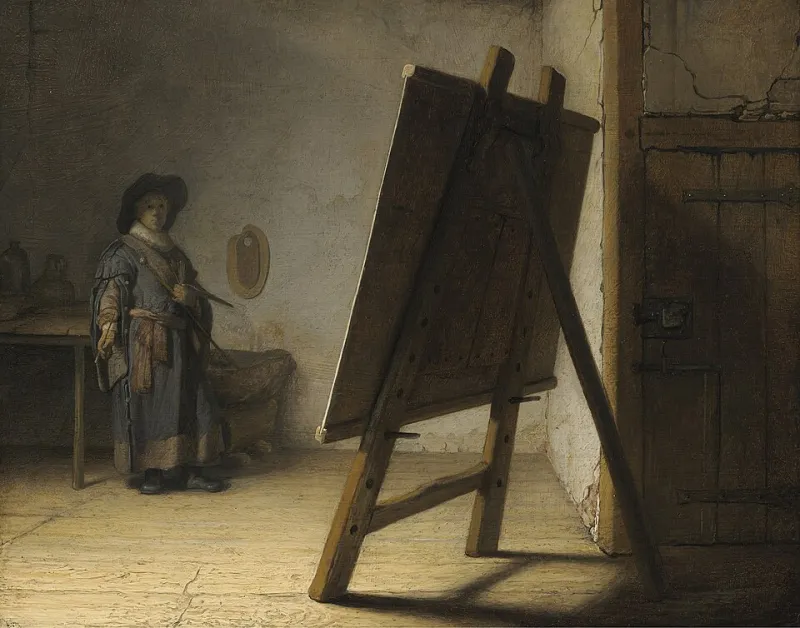
Photo: Rembrandt, Public domain, via Wikimedia Commons
"I write best when I've had a little something." You've heard some version of this from writers, painters, musicians, filmmakers — the creative-cannabis connection is practically its own mythology at this point. But here's the thing nobody tells you when you're starting out: smoking weed and smoking the right weed for your creative process are two completely different experiences.
The wrong strain at the wrong time turns your three-hour writing session into a two-hour spiral of existential thoughts followed by one hour of watching YouTube videos about deep-sea creatures. The right strain? That's when the words come out like you've been uncorking them, when the melody you've been chasing finally makes sense, when the painting tells you what it wants to be.
We talked to working creatives across the country, dug into the cannabinoid science, and smoked a lot of weed in the name of journalism to bring you this guide. You're welcome.
Why Cannabis and Creativity Actually Connect (Beyond the Vibes)
Before we get into specific strains, let's spend a minute on the "why" — because understanding the mechanism helps you make smarter choices.
Creativity, at a neurological level, involves a specific kind of thinking called divergent thinking — the ability to make unexpected connections between seemingly unrelated concepts, to approach problems from angles that aren't immediately obvious, to find the weird left turn that becomes the best idea in the room. THC has been shown in multiple studies to enhance divergent thinking, at least at moderate doses. A 2014 study out of Leiden University found that low-to-moderate cannabis consumption increased the number of creative connections participants could generate.
The key phrase there is low-to-moderate. Higher doses tend to flip the script — too much THC activates anxiety pathways, creates cognitive fog, and turns that free-associative creative energy into a kind of mental paralysis. This is why dosing matters enormously for creative work, and why strain selection isn't just about preference — it's about function.
CBD also plays a role worth noting. It modulates THC's more anxiety-inducing tendencies, which means balanced CBD/THC strains can give you the creative openness of THC without the "oh no, is this paragraph actually terrible" spiral that high-THC strains sometimes trigger.
For Writers: Strains That Put Words on the Page
Writers need a particular kind of high — one that opens up associative thinking and loosens the internal editor without completely destroying sentence structure comprehension. You want to be loose, not lost.
Jack Herer has been a writer's companion for decades, and for good reason. Named after the legendary cannabis activist and author of The Emperor Wears No Clothes, this sativa-dominant strain delivers a clear-headed, energetic buzz that feels like your brain just got a software update. The terpene profile — heavy on terpinolene and ocimene — keeps things light and focused rather than sedating. Multiple freelance writers we spoke to named it their go-to for first-draft sessions.
"Jack Herer is like coffee for the part of my brain that actually wants to write," said Maya, a Brooklyn-based essayist who's been using cannabis as part of her writing practice for six years. "It doesn't make me feel high so much as it makes me feel... unlocked."
Green Crack (yes, the name is a lot — some dispensaries list it as Green Cush) is another sativa powerhouse that writers swear by for deadline days. It's intensely energetic, almost uncomfortably so for some users, but for writers who need to generate volume quickly, that propulsive energy can be exactly right. Best used in moderation unless you want your internal monologue to run at 2x speed.
For writers who tend toward anxiety — and let's be honest, that's most writers — Cannatonic, a high-CBD hybrid, offers a gentler on-ramp. The 1:1 CBD-to-THC ratio keeps the paranoia at bay while still opening up that creative looseness. Great for editing sessions when you need to be critical without being brutal.
For Visual Artists: Strains That Shift Your Perception
Painters, illustrators, graphic designers, photographers — visual creatives often report that cannabis changes the way they see things, not just the way they think about them. Color relationships feel different. Spatial awareness shifts. The interesting question is which strains amplify visual creativity versus which ones just make you stare at your own work convinced it's either a masterpiece or garbage.
Blue Dream has an almost cult-like following among visual artists, and it earns it. This California-born sativa-dominant hybrid (Blueberry x Haze) delivers a gentle, full-body relaxation alongside a cerebral elevation that feels tailor-made for getting into a flow state with a brush or stylus. It's not as racey as pure sativas, which means you can stay in a session for hours without burning out.
Derek, a muralist based in Los Angeles who works on large-scale public art projects, describes it this way: "Blue Dream is my 'get into the wall' strain. Big projects require you to zoom out and see the whole thing at once, and something about that high helps me hold the entire composition in my head while I'm working on a single section."
Strawberry Cough is worth highlighting for artists who do detailed, technical work — illustration, tattooing, architectural rendering. The focused, uplifting quality of this sativa keeps you in the zone without the heavy body sedation that would make precise hand movements feel clumsy. The mood elevation is real but manageable.
For artists who want to push into more experimental territory, Trainwreck — a potent sativa hybrid — has a reputation for inducing the kind of lateral, associative thinking that makes for genuinely surprising creative output. It's not for the faint of heart or the inexperienced, but artists who know their tolerance often cite it as the strain that takes them somewhere unexpected.
For Musicians: Strains That Get You in the Groove
Music might have the deepest cultural roots with cannabis of any art form. The relationship between jazz, hip-hop, reggae, rock, and weed is practically a historical document at this point. But musicians need something specific — they need to stay rhythmically connected, emotionally open, and technically capable all at once. That's a precise target.
Sour Diesel is practically the unofficial strain of the American music scene. Energetic, euphoric, and social — it's great for collaborative sessions, jam bands, and any situation where you need to stay locked in with other musicians. The diesel-forward terpene profile (high in caryophyllene and limonene) keeps the energy up without the jittery anxiety some sativas can produce.
Northern Lights serves a completely different musical purpose — it's the strain for solo sessions, late-night recording, and the kind of deep listening that helps you hear what a track actually needs. The indica-dominant profile relaxes the body and quiets the inner critic, which is why so many producers and songwriters use it for the "what does this song want to be" phase of the process.
Jamila, a jazz pianist from Chicago who performs regularly and teaches at a local music school, puts it simply: "Sour D is for playing. Northern Lights is for writing. I keep them in separate spots in my studio so I don't mix them up."
ACDC, a high-CBD strain with minimal psychoactive effect, deserves a mention for performing musicians who need to be on stage sharp. The anti-anxiety properties of CBD without significant impairment make it genuinely useful for stage fright without the risk of being noticeably high during a performance.
Universal Tips for Creative Cannabis Use
Regardless of your art form, a few principles apply across the board:
- Start lower than you think you need to. The creative sweet spot is almost always at a lower dose than your recreational sweet spot. Half a bowl, not a full one.
- Sativa-dominant strains are generally safer bets for daytime creative work. Indicas are better for late-night reflection, not active creation.
- Keep a notebook or voice memo app nearby. THC-enhanced ideas feel permanent in the moment but evaporate quickly. Capture everything.
- Establish your environment before you light up. Have your materials ready, your playlist set, your phone on Do Not Disturb. Cannabis amplifies whatever environment you're in — make it a good one.
- CBD ratios are your friend if anxiety is your enemy. Don't let paranoia derail a session. Hybrid and balanced strains are underrated for creative work.
The Creative Takeaway
Cannabis isn't a creativity switch — it's more like a tuning mechanism. The right strain in the right amount for the right kind of work can genuinely open doors that feel stuck. But it requires intention, self-knowledge, and a willingness to experiment thoughtfully rather than just grabbing whatever's in the jar.
The artists and musicians who use cannabis most effectively treat it like any other tool in their creative kit — something with specific uses, specific limitations, and a learning curve worth climbing. Your perfect strain is out there. The fun part is the research.